Saturday, 6 April 2013
Photos taken along the canal
Mallard ducks and drakes on the canal.
The lock and lock keepers cottage.
A view of the canal with brick path and mooring posts along the edge.
A narrow boat moored.
A pleasure boat and narrow boat.
Monday, 1 April 2013
Exploring canals
After looking at several ideas I have now decided that a good activity book for children would be on exploring canals (particularly as Britain has numerous canal systems on most peoples doorsteps; from the canal system in London through the Midlands and up into Scotland). A brilliant place for children to get outdoors and explore nature and the area around them!
So I have started to research what literature is available and have been coming across various interesting web pages:
2 years ago this blog was written and is very thorough and interesting - Children's Canal Books in England
...Part of the blog.
My idea is to make a book about a canal cat that takes children on an adventure along the canal, bumping into wildlife and people and features common on our canals. Cats are naturally curious and adventurous, just like children and so what better companion for a child! The child could take the book with them and use it as a spotting reference and to find out more about things they will see on their walk.
My book will be aimed at 5-7 year olds and so would require them to explore with parental/adult company, but still allow them freedom to enjoy what they see!
Here is a page of a trail leaflet for my local canal available from: http://canalrivertrust.org.uk/explorers-resources/73-Stourport-on-Severn-Trail-compressed.pdf
Here is a children's reading book about a canal cat:
It has appealing cover art work...
I would like to have colour illustrations on my pages which has more appeal to this age range. Images help to engage youngsters and so this would encourage them to want to go and explore the canal.
Jotting down some ideas on paper.
So I have started to research what literature is available and have been coming across various interesting web pages:
2 years ago this blog was written and is very thorough and interesting - Children's Canal Books in England
...Part of the blog.
My idea is to make a book about a canal cat that takes children on an adventure along the canal, bumping into wildlife and people and features common on our canals. Cats are naturally curious and adventurous, just like children and so what better companion for a child! The child could take the book with them and use it as a spotting reference and to find out more about things they will see on their walk.
My book will be aimed at 5-7 year olds and so would require them to explore with parental/adult company, but still allow them freedom to enjoy what they see!
Here is a page of a trail leaflet for my local canal available from: http://canalrivertrust.org.uk/explorers-resources/73-Stourport-on-Severn-Trail-compressed.pdf
It has appealing cover art work...
I would like to have colour illustrations on my pages which has more appeal to this age range. Images help to engage youngsters and so this would encourage them to want to go and explore the canal.
Jotting down some ideas on paper.
Saturday, 23 March 2013
Preliminary design ideas and sketches
Here I was trying out page ideas for a book to encourage youngsters to go out and enjoy nature.
The first idea was for a book that encouraged not only activities in the forest, but also to give children information about the importance of forests to us. All done from a child's perspective. I also thought of the idea of taking the reader on a journey through the life stages of a tree; from seed, to full grown, to its use after it falls in a storm and nature taking it over.
The other idea would be to follow the things that you can do in a forest, eg. wildlife, trees and plants, minibeasts.
Forrest school for KS1 & 2.
http://www.forestry.gov.uk/forestry/infd-6frg2r
http://forestsforall.com/about-the-book/description/
This was an idea for younger children; a board book with simple bright pictures of insects. The book would be the shape of a butterfly and the page could turn in 2 halves. The child would have to match the insect with what it feeds on.
This was an idea of a book taking a child on a journey outdoors at dusk to spot the creatures of the night. There would be a window on one side with a pull out reveal of the creature. On the opposite page would be a group of lift the flaps, with information about the creature underneath.
This last idea is for a book encouraging a child to go on a Nature Trail hunt. Using lift the flaps on each page a child could discover mini beasts in the garden or on a walk and there would be information about each under the flaps. The repetitive use of Who lives here? could be used on each page. This helps the younger child to follow the book.
The first idea was for a book that encouraged not only activities in the forest, but also to give children information about the importance of forests to us. All done from a child's perspective. I also thought of the idea of taking the reader on a journey through the life stages of a tree; from seed, to full grown, to its use after it falls in a storm and nature taking it over.
The other idea would be to follow the things that you can do in a forest, eg. wildlife, trees and plants, minibeasts.
Forrest school for KS1 & 2.
http://www.forestry.gov.uk/forestry/infd-6frg2r
http://forestsforall.com/about-the-book/description/
This was an idea for younger children; a board book with simple bright pictures of insects. The book would be the shape of a butterfly and the page could turn in 2 halves. The child would have to match the insect with what it feeds on.
This was an idea of a book taking a child on a journey outdoors at dusk to spot the creatures of the night. There would be a window on one side with a pull out reveal of the creature. On the opposite page would be a group of lift the flaps, with information about the creature underneath.
This last idea is for a book encouraging a child to go on a Nature Trail hunt. Using lift the flaps on each page a child could discover mini beasts in the garden or on a walk and there would be information about each under the flaps. The repetitive use of Who lives here? could be used on each page. This helps the younger child to follow the book.
Friday, 22 March 2013
Research of books already available
Keeping a track of discoveries can be fun for children too, so give them
a notebook where they can jot down, stick in and illustrate their
findings. Junior An ideal accessory for jotting down the wonderful
things you see while out walking. Daily Express It is the time of year
when booksellers shelves are bulging with activity books designed
to make you feel uneasy about the amount of time your child sits in
front of the telly. Sitting quietly among them is the Adventurer's
Notebook whose refreshingly gentle voice encourages wildlife watching
and trail finding, with empty pages to fill with your child's very own
secret plans. Daily Telegraph This great book could inspire a whole new
generation of young naturalists. BBC Countryfile All you will need to
make your own record of your adventures. The Adventurer's Notebook is
just right for inquisitive children to take with them when exploring the
great outdoors. Primary Times'
From the authors of London Adventure Walks, The Adventurer’s Notebook
has heaps of white space for creative young minds to fill with
drawings, stories and ideas inspired by all the wonderful things you can
see and do while out and about in the wild. It is packed with
imaginative things to make and do, places to record your finds,
instructions on how to cook from the wild, plus bird-spotting tips and
how to identify wild flowers and trees.
This is the perfect notebook for inquisitive children to take when exploring the great outdoors. Whether scavenging on the beach, climbing trees in the woods, lazing by the river, playing in the park or just hanging out in the back garden, this is all you will need to make your very own record of your adventures.
Here is another interesting book (one of a series) for younger children that arouses interest in birds, bugs etc. in the garden:
This is the write up for the bug book: Take a journey through the garden and discover the bugs that are living
there. The beautiful illustrations create the world of the garden,
combined with text that leads young readers to the hiding places of
various bugs. inviting them to guess what creature they have found. My
First Book of Garden Bugs is the perfect introduction to the names of
some common garden insects, along with interesting facts about them. Here is an inside page from the companion book on bugs:
Lovely clear illustrations and interesting facts and information about the minibeasts.
This next book introduces younger children to the world of gardening, giving them plenty of ideas of how to grow plants that they can use.
George and Flora are planning a surprise party to welcome home their new baby sister! They're growing all the food for it themselves - with a little help from Grandpa - and are full of excitement as they watch how the baby grows in Mum's tummy and the vegetables grow in their garden. With clear and easy to follow tips and a handy month-by-month planting planner, in this title, readers will find all the information they need to grow and cook their own tasty food.
The illustrations in this book are a mixture of hand drawn pictures and photo collage; it also has a planner and many tips to make it a very sciting book for children to interact with.
I now have a clearer view of how I want my book to attract children and make them really want to get out and explore the world around them!
Lovely clear illustrations and interesting facts and information about the minibeasts.
This next book introduces younger children to the world of gardening, giving them plenty of ideas of how to grow plants that they can use.
George and Flora are planning a surprise party to welcome home their new baby sister! They're growing all the food for it themselves - with a little help from Grandpa - and are full of excitement as they watch how the baby grows in Mum's tummy and the vegetables grow in their garden. With clear and easy to follow tips and a handy month-by-month planting planner, in this title, readers will find all the information they need to grow and cook their own tasty food.
The illustrations in this book are a mixture of hand drawn pictures and photo collage; it also has a planner and many tips to make it a very sciting book for children to interact with.
I now have a clearer view of how I want my book to attract children and make them really want to get out and explore the world around them!
Tuesday, 12 March 2013
How Children Learn
'Children learn best when the Learning experience is pleasant and free' John Holt (author and educational critic)
Activities should be tailored to the way children learn; the use of design and visual skills to enhance written part of book.
Babies and Learning
- It was traditionally believed that a baby's mind was a blank slate ('tabula rasa') on which experiences were impressed.
- Challenges occured to this theory with the development of methodologies: 3 examples:
- Non nutrive sucking - place a dummy near something else to get the baby to change focus.
- Habituation through doing the same thing; repetition
- Visual expectation - associating with a piece of music or something else as seen in:
Pavlov's Dogs
by Saul McLeod published 2007, (accessed from: http://www.simplypsychology.org/pavlov.html)
Like many great scientific advances, classical conditioning was discovered accidentally.
During the 1890s Russian physiologist Ivan Pavlov was looking at salivation in dogs in response to being fed, when he noticed that his dogs would begin to salivate whenever he entered the room, even when he was not bringing them food. At first this was something of a nuisance (not to mention messy!).
Pavlovian Conditioning
Pavlov started from the idea that there are some things that a
dog does not need to learn. For example, dogs don’t learn to salivate
whenever they see food. This reflex is ‘hard wired’ into the dog. In
behaviorist terms, it is an unconditioned response (i.e. a stimulus-response connection that required no learning). In
behaviorist terms, we write:
Unconditioned Stimulus (Food) > Unconditioned Response (Salivate)
Pavlov showed the existence of the unconditioned response by presenting a dog with a bowl of food and the measuring its salivary secretions (see image below).

However, when Pavlov discovered that any object or event which the dogs learnt to associate with food (such as the lab assistant) would trigger the same response, he realized that he had made an important scientific discovery, and he devoted the rest of his career to studying this type of learning.
Unconditioned Stimulus (Food) > Unconditioned Response (Salivate)
Pavlov showed the existence of the unconditioned response by presenting a dog with a bowl of food and the measuring its salivary secretions (see image below).
However, when Pavlov discovered that any object or event which the dogs learnt to associate with food (such as the lab assistant) would trigger the same response, he realized that he had made an important scientific discovery, and he devoted the rest of his career to studying this type of learning.
This proves that the very young can learn from very early on in their lives.
- Learning through the 5 senses:
- taste
- touch
- sight
- sound
- smell
Sensory Stimulation Theory
(accessed from http://www.brookes.ac.uk/services/ocsld/archive/theories.html)
Traditional sensory stimulation theory has as its basic
premise that effective learning occurs when the senses are stimulated
(Laird, 1985). Laird quotes research that found that the vast majority
of knowledge held by adults (75%) is learned through seeing. Hearing is
the next most effective (about 13%) and the other senses - touch, smell
and taste account for 12% of what we know. By stimulating the senses,
especially the visual sense, learning can be enhanced. However, this
theory says that if multi-senses are stimulated, greater learning takes
place. Stimulation through the senses is achieved through a greater
variety of colours, volume levels, strong statements, facts presented
visually, use of a variety of techniques and media.
- Stimulating a number of senses together enhances learning
Ways of Learning -
These are usually established by school age.- Auditory - rhythm and pace; they hear a pace, tone, pitch of music and assocciate it with something else. Verbal lectures, discussions etc.
- Visual - need visual stimulation. For example, creative maps, diagrams etc.
- Kinesthetic - Physical activity, touch and movement. Doodling, showing a need for practical activities.
'I hear and I forget I see and I remember I do and I understand' Ancient Chinese Proverb.
'When a child is with others they learn better' and 'If assisted today can do it on their own tomorrow'
- Self motivated and self directed learning:
- do things for a reward or for the sheer joy of achieving
- 3 recognised approaches to aiding and improving a child's learning:
- Building on pre-existing knowledge; taking the familiar to explain the unfamiliar.
- Transferring knowledge: applying the learned information to a real life situation makes the information more meaningful and it better retained.
- Memory strategies:
- Summarising
- Grouping
Books
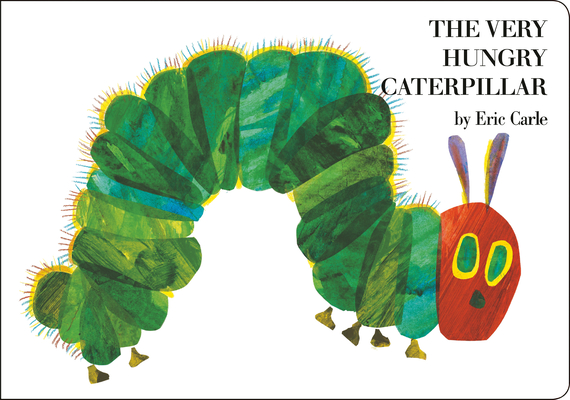
'Small is Good' is a page from reference book comparing varied sized vehicles with horses power/weight etc.The Very Hungry Caterpillar - Eric Carle:
This book is almost 44 years old. The book follows a caterpillar as it eats its way through a wide variety of foodstuffs before pupating and emerging as a butterfly. The winner of many children's literature awards and a major graphic design award. It has only 22 words but involves counting, days of the week, food names and visual descriptions, the life cycle of a butterfly, bright textured illustrations, holes and rhythm.
Added Features:
- paper engineering
- pull tabs
- flaps/fold outs
- pop ups
- die cuts
- textures
- specialised inks
- digitalised (CD's/sound clips)
- stickers
- crayons
- wipe clean/blackboard
- puppets
Wednesday, 6 March 2013
Initial Research Findings/Thinking
1 - Analysis of clients website etc.
A.-
- who are they - Naturebase school camps are an inspirational residential camping environment for primary schools providing unparalleled learning experiences for every child who comes to stay. One of the best ways to describe it is a 24 /7 forest school experience where they live and learn outside, but with the comfort of their large stone barn for eating, teaching, relaxing and playing in if needed.
- what do they do with schools - Only one
school stays at a time and they work with the group from dawn until after
dark each day. Activities:
Helping out (meals), Warm up games, West Wales adventure, Survival in the wild, Developing a sustainable future (A range of activities based around living more sustainably, promoting a deeper understanding of environmental issues, locate the best place for a wind turbine, make cob/earth bricks, build a solar oven, help construct a bug hotel and make and float a solar powered boat.), Outdoor Pizza Making, Art in the landscape (From scavenging in the landscape we can create natures palette, sculptures, wet clay faces and puppets, natural tie dying, name plates collages, mobiles, leaf bowls, aboriginal art paintings, nettle paper, cob bird boxes, and masks.), Wilderness woodland crafts, Farmers in training, Bugtastic, Muddy messy obstacle course, Celtic safari, Rivers and streams, Forest Skills and woodland ways, Aberaeron Harbour town, Crab fishing off the harbour, Raft building on the beach, Learning and building together (Through a series of imaginative team challenges, children will experience a variety of problems to solve, testing leadership and group skills along the way essential skills towards active global citizenship), Visit a Welsh speaking school, Day excursions (These are possible at the Centre for Alternative Technology (C.A.T.) and the hands on Dolaucothi Roman gold mines and the lead mines near Aberystwyth.), Evening activities include-Experiencing a night time safari, singing around the campfire, hunting for bats, orienteer around the site by torch light or just listening to stories under the stars. - what do they do with teachers groups
Tuesday, 5 March 2013
This is my sample double page spread for the National Trust campaign to get children of the sofas and outdoors engaging with the natural world. I chose, 'Check out the Crazy Creatures in a Rock Pool' and aimed it at children from an older age range (9 - 11). The page could also be used for younger children to spot the creatures together with an adult/ older child, who could read the information to them.
I used photos from the internet as I felt that accuracy was important in a reference page. A hierarchy of texts was used to highlight the title and the names of the creatures and 3 different text colours used to link information on the pages. I also put important guide lines to safe rock pooling in a box to draw the reader to the rules and in order to keep the information separate from the rest. Two font styles were used but one could possibly be used in order to keep more of harmonious feel to the page.
Subscribe to:
Posts (Atom)